 The American Sociology Association defines culture as" the languages, customs, beliefs, rules, arts, knowledge, and collective identities and memories developed by members of all social groups that make their social environments meaningful". Is this important to us? Yes! It is important because it directly affects how we provide care to our patients. Have you come across the term Transcultural nursing? This is an area of study that focuses on how patterns of behavior in health, illness, and caring are influenced by the values and beliefs of specific cultural groups. It applies this knowledge in the planning and provision of culturally appropriate care. Please follow the links for more information https://journals.lww.com/nursing/Fulltext/2005/01001/UNDERSTANDING_TRANSCULTURAL_NURSING.2.aspx, https://clinmedjournals.org/articles/ianhc/international-archives-of-nursing-and-health-care-ianhc-2-053.php?jid=ianhc
 As a nurse one often tends to work in a different set up every few years and with this, one tends to interact with people from different backgrounds. Of all places, Mombasa for me took a bit of adjusting and I think I still am adjusting. Being a tourist destination it is very multicultural. Therefore, it offers a great opportunity to put one's cultural sensitivity to the test. When I now reflect on it. I have realized adjusting was slightly difficult because of one thing, ethnocentrism.
 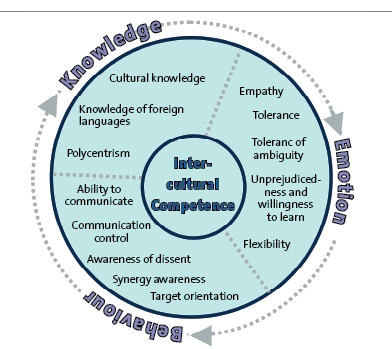 Ethnocentrism is the view that one's own culture is better than anyone else's culture. It may present itself in the most subtle of ways or at times very blatantly for instance when a patient informs us that they are unwell due to past transgressions. What is the first thing that comes to your mind? Reflect on it. Did it affect how you handled them? Be honest with yourself.
Do you finally see why cultural competence is important?
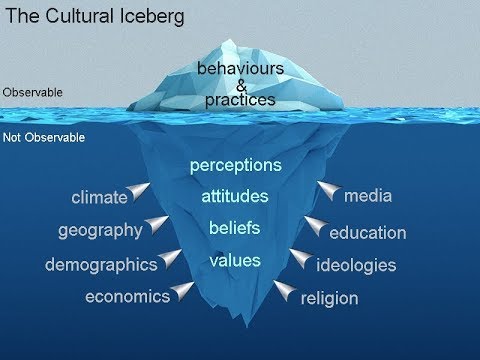
From our above definition, we realize that culture can be easily categorized into two; the seen and unseen aspects. See below
Cultural competence in nursing helps one to
- Develop awareness of one’s own sensations, thoughts, and the environment without letting it have an undue influence on those from other backgrounds.
- Demonstrate knowledge and understanding of the client’s culture.
- Be more accepting and respectful of everyone's cultural differences.
- Aid in adapting care to be congruent with the client’s culture.
 So what levels of cultural competence do we fall in? To fully understand this, there exist different self-assessment tools one may use. To access the most recent versions is at a fee but one free example is the Ethnic-Sensitive Inventory ESI; Ho 1991. Look it up. Cultural competence is categorized as
- Unconscious incompetence which is not being aware that one is lacking knowledge about another culture
- Conscious incompetence which is being aware that one is lacking knowledge about another culture
- Conscious competence which is learning about the client’s culture, verifying generalizations about the client’s culture, and providing culturally specific interventions
- Unconscious competence is automatically providing culturally congruent care to clients of a diverse culture.
By understanding the above we then can provide culturally congruent care by
- Cultural Care Preservation/Maintenance -where we look at what we can do to preserve and maintain the cultural practices of an individual or family while receiving safe, holistic care somewhere in the Healthcare Delivery System. For example when we allow for a religious leader to pray for a loved one before they are taken into theatre or for instance or we encourage direct care such as bathing, feeding, and other activities of daily living by family members who may be interested in actively contributing in the care of a loved one
- Cultural Care Accommodation/Negotiation -where we look at what we can do to accommodate the patient and negotiate with the patient/family within the healthcare environment to provide culturally congruent care, For example, when we allow the placing of a band on the navel of a newborn as it is believed it provides healing and protection.
- Cultural Care Repatterning/Restructuring- where we look at what we need to do with the patient and family to re-pattern or restructure their lifeways to promote healing and wellness, always being cognizant of the cultural influences that affect why they do what they do in their life experience. An example is when there is a patient who does not believe that they need an advance directive because “death is up to God.” The nurse can educate her about having her wishes being followed when she can no longer make decisions or speak for herself. Explaining that by creating advance directives, her wishes will be followed
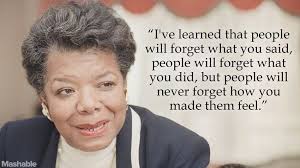
In conclusion, as we continue to make ourselves more visible as professional nurses. It is valuable that we always recall this quote by Maya Angelou which states;
;

 “The mediocre teacher tells. The good teacher explains. The superior teacher demonstrates. The great teacher inspires.”
 When was the last time you had someone inspire you to learn something new. Did you enjoy the process of learning or facilitation? Do you ever think back to when you started your nursing journey? That first experience where you finally got the new uniform and your practicing license. How did you find your new work station?
 The transition period for any cadre of staff is very important. This period has a great impact on
 Are you familiar with preceptorship/mentorship? According to Segen's Medical Dictionary (2012), preceptorship refers to a structured, supportive period of transition from learning to applying a complex skill. To be a preceptor one can be either formally trained or it can be an informally acquired skill for instance through extensive clinical practice one can enhance their skill levels to a point where one can easily educate a novice. According to the Cambridge dictionary (2019), definition mentorship refers to a person who gives a younger or less experienced person help and advice over a period of time. In organizations where these two programs are effectively implemented, one can easily identify the difference in their specific roles. However, in most of our set-up, these words are used interchangeably. For further clarity please follow the links below
 As organizations strive to provide quality care. Greater emphasis needs to be put into understanding that autonomous practice and high-functioning critical-thinking skills develop over time with proper support. This can only be achieved through proper analysis of staff retention strategies such as effective nurse-patient ratios, generating effective preceptorship programs(Competent preceptor selection) and increasing budgetary allocation for academic development so as to help enhance clinical competencies, etc. In organizations willing to generate impact among the nursing profession they can participate in the Nightingale 2020 challenge organizations by following this link
 “Our sexuality affects everything we do, and everything affects our sexuality. The same is true of our spirituality -that which is most deeply meaningful to us. We can deny both. But denying them does not mean they are not both alive in every breath and heartbeat of life.”
 A couple of years ago while on a nightshift a middle-aged woman dashed through the ER door screaming that her daughter had been raped. My colleague and I quickly rushed to the vehicle on the driveway and tried to assist the daughter out of the vehicle. We managed to do so and got her to the examination couch. I was so confused about it all. It was still very unclear on exactly what I should do but my colleague had more experience in handling such delicate cases and guided me through it. We tried to make her as comfortable as possible but upon examination, things suddenly were not adding up. Something was just off. The more we conducted our assessment the more my intuition kept telling me that something was amiss. To keep both parties calm I said nothing and when all samples were collected the treatment process was initiated. A few days later when the police got actively involved new information was disclosed. There was no rape ordeal that had happened but rather she had learned she was pregnant a few weeks prior and had informed her boyfriend who denied impregnating her. Without having appropriate information she had assumed that if she reported being raped. The emergency treatment would terminate her pregnancy without her parents' knowledge. She didn't have full knowledge of what really goes on. At the time she was only 18 years old and had just started campus.
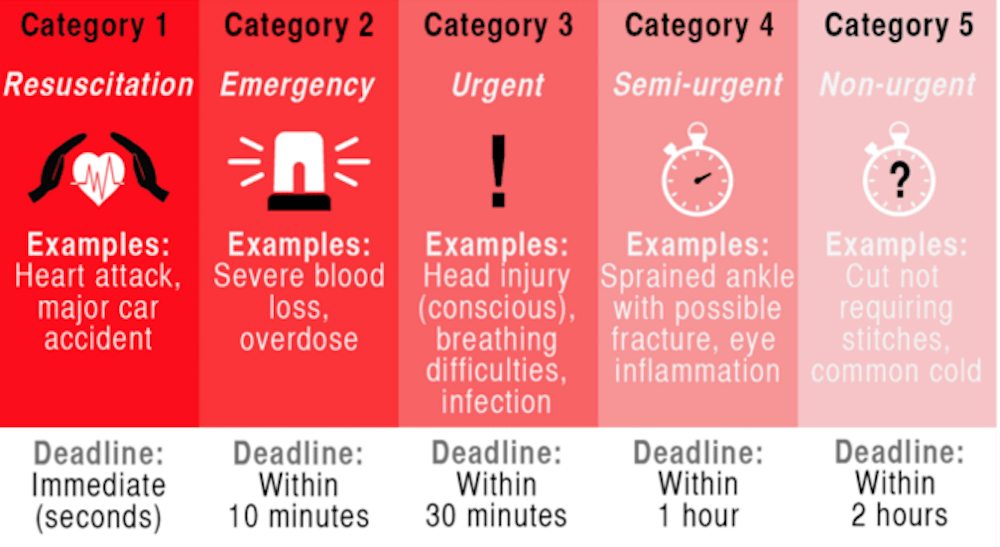 One Saturday while in triage there developed sudden flooding of a foul smell. As I tried to identify the source a young lady walked in. She appeared to be in significant pain but she didn't wish to fully divulge information yet. On enquiring further about her last menstrual cycle she dismissed it as they tend to be irregular and had no recollection of the date. Her presenting complaints were diarrhea and mild abdominal pain. On physical examination she was pyrexic at 38.50Cand tachycardic at 122beats per minute her skin appeared flushed. While in the doctors' room further examination revealed she had had a septic abortion which had resulted in retained products of conception and the infection was so bad that it had created a vesicovaginal fistula hence the foul smell, her cervix was injured and the infection had infiltrated and obstructed her fallopian tubes. The attending gynecologist informed her that future conception was not fully guaranteed if she did not get properly treated. She had no insurance and she wasn't ready for full disclosure to her family. She denied ever being pregnant to her father who had come to check up on her when she informed him she is in hospital. He paid only for what was done in the ER and requested a transfer to a different facility. She was only twenty years old.
 These two examples are our sisters, daughters, friends, and grandchildren so if we say sexuality doesn't affect us we kid ourselves. It can be as simple as our reproductive health affecting our generalized physical health. For instance, if a young man develops an STI which is untreated and developed late-stage symptoms of syphilis later on in life. He will be quickly diagnosed as psychotic without it being quickly linked to the late-stage presentation of syphilis. The reason it can be untreated for so long is because whenever he experiences symptoms he cannot phantom visiting a health facility to be mocked by the attending caregiver. Adolescents and young adults are a sensitive age group.
 Did you know that in 2017 the MOHkenya had obtained data that showed that "one in five girls began having children by the age of 19 years and only about 2% of teenage mothers finally go back to school?" You can view it here,
  Examination of different studies show that huge figures later translate to
  To try to mitigate this we should participate in it. How?
 As we continue promoting healths lets not act as if sexual health is a very separate entity. When one digs dipper one realizes just how big a role it plays in all aspects of our lives. In our daily interaction with our patients' let us keep in mind that, "Sexual health is more than freedom from sexual disease or disorders. Sexual health is non-exploitive and respectful of self and others. Sexual health is dependent upon an individual's well-being and sense of self-esteem. Sexual health requires trust, honesty, and communication."